
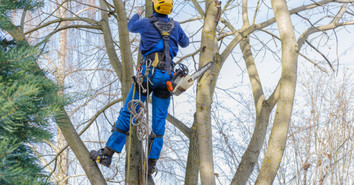
Professional tree work demands more than strength and balance. Arborists rely on refined climbing techniques that increase efficiency, reduce fatigue, and protect lives on every ascent. Whether you manage a municipal tree crew or oversee a private arboriculture company, your climbing systems directly affect productivity and safety outcomes.
How do experienced arborists move confidently through complex canopies? The answer lies in disciplined technique, proper equipment selection, and consistent training. This arborist’s guide to tree climbing techniques breaks down the core climbing methods that support safe, efficient tree care operations.
Start With Strategic Anchor Selection
Every successful climb begins before your boots leave the ground. Anchor selection determines stability, work positioning, and rescue readiness. Strong unions, healthy limbs, and appropriate diameter all factor into anchor choice; you must inspect for decay, cracks, and weak attachments before committing your line. Visual inspection alone does not always reveal internal weakness, so sounding the tree and understanding species-specific failure patterns strengthens your evaluation.
High tie-in points improve rope angles and reduce drag. A higher anchor also expands your working radius within the canopy. When you set your line properly from the start, you eliminate unnecessary redirects and wasted movement later.
Use Doubled Rope Systems for Control and Positioning
Many arborists rely on a moving rope system (MRS), often called a doubled rope system, because it offers excellent control for pruning and moderate-height work. This method runs the rope over a canopy anchor and back down to the climber. Friction hitches or mechanical devices allow for smooth ascent and controlled descent. The system multiplies force, which reduces the effort required to advance upward.
Doubled rope systems shine when you need precise positioning. You can easily adjust slack, lean back into your line, and stabilize your stance while operating a saw. Crews performing detailed canopy thinning or structural pruning benefit from this responsiveness. However, rope management becomes critical, as excess rope below the climber can create tangles or snag hazards. Organized ground support and disciplined rope handling keep the system efficient.
Increase Efficiency With Stationary Rope Systems
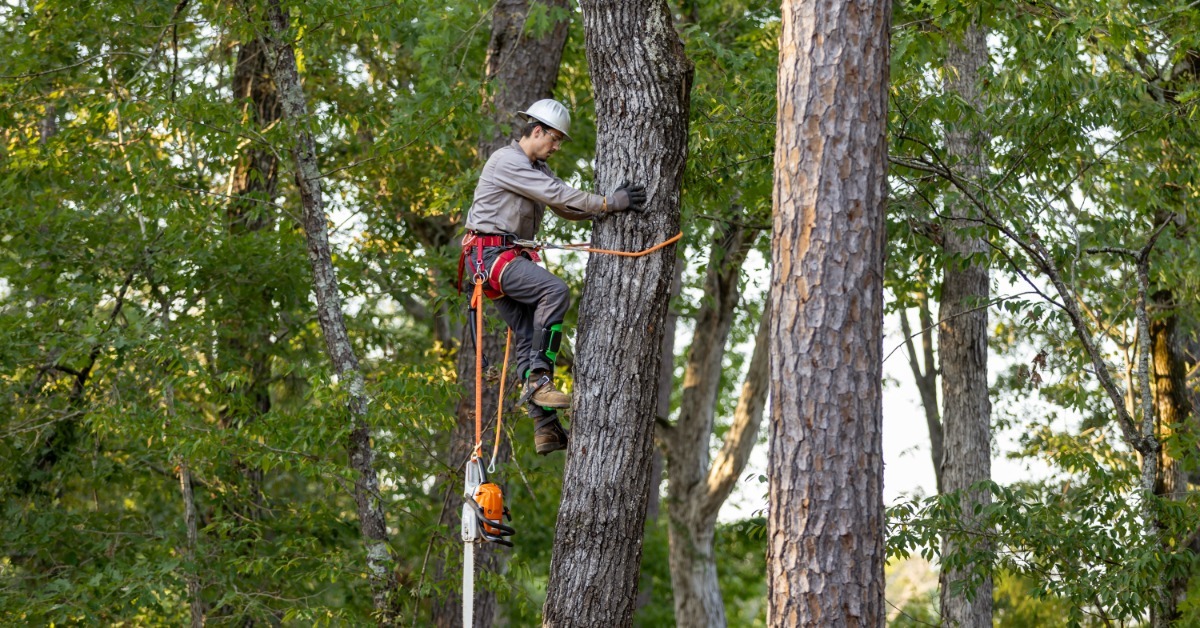
Tall removals and large pruning jobs demand energy conservation. A stationary rope system (SRS) offers that advantage. Unlike doubled systems, SRS anchors one end of the rope while the climber ascends a single fixed line. Mechanical ascenders or rope-walking systems allow for rapid vertical progress with minimal friction loss, which means less wasted energy. Climbers conserve strength during long ascents and maintain sharper focus at working height.
SRS also simplifies redirects and canopy access. You can isolate limbs and reposition anchors without resetting the entire system. For large-scale operations or multi-climber teams, that flexibility improves workflow. But because SRS places full load on a single line, equipment selection becomes even more important. High-quality ropes, ascenders, and connectors designed for professional arborist use ensure system integrity under dynamic loads.
Reduce Fatigue and Increase Precision With Proper Positioning
Climbing does not end once you reach your target height. Productive arborists must master work positioning techniques that support safe cutting and tool control. A stable position requires three points of contact or a secure tie-in combined with solid footing. Climbers should lean into their rope rather than rely solely on limb balance to distribute weight evenly and free both hands for cutting.
Adjustable lanyards help you maintain stability during limb walks or trunk work. By setting secondary attachment points, you reduce swing potential and maintain control when shifting body weight. When using a tree saddle harness, proper bridge adjustment and side D-ring positioning allow for smoother lateral movement. Effective positioning also protects the tree, as balanced weight distribution prevents bark damage and unnecessary limb stress.
Support Controlled Limb Removal With Mechanical Advantage Systems
Tree removal requires calculated force management. Climbers use mechanical advantage systems to lift, lower, or redirect heavy sections safely. Rigging blocks, pulleys, and lowering devices create controlled pathways for cut material, while proper setup prevents shock loading and reduces strain on anchor points.
Each element works together to manage dynamic forces. Poor rigging technique risks property damage and crew injury, but strong communication and pre-job planning eliminate guesswork during high-load operations. When teams combine sound climbing techniques with advanced rigging knowledge, they complete removals efficiently without compromising safety.
Conserve Energy With Foot Ascenders and Rope-Walking Techniques
Ascending with upper body strength alone drains energy quickly. That’s why modern arborists incorporate foot ascenders and rope-walking systems to engage their stronger leg muscles. Rope-walking techniques use synchronized upper and lower ascenders, and each step advances the climber vertically with minimal effort.
Energy conservation matters because fatigued climbers make slower decisions and react poorly to unexpected hazards. By relying on efficient ascent systems, crews maintain mental clarity throughout the job. Proper training remains essential since incorrect setup or poor coordination can cause uneven loading or device misalignment. Consistent practice ensures smooth, fluid movement during ascent.
Expand Canopy Access With Lateral Movement Techniques
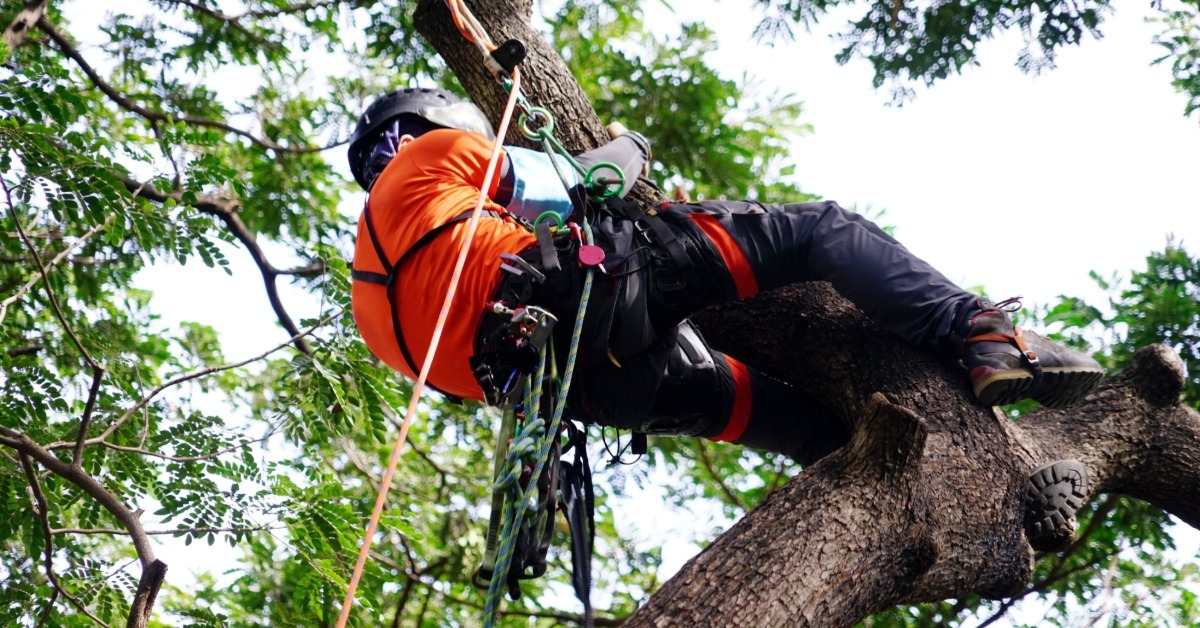
Once inside the canopy, vertical climbing alone does not complete the task. Arborists must navigate horizontally to reach pruning targets and inspection zones. Limb walking requires balance, rope tension awareness, and strategic tie-in adjustments. Before committing weight to a limb, assess diameter, attachment strength, and wood condition.
Advance your climbing line gradually as you move outward; maintaining appropriate rope angle prevents uncontrolled swings. When working far from the trunk, set redirects to maintain optimal positioning. Use your lanyard for added security during complex maneuvers. This secondary attachment reduces risk if a limb fails or footing shifts unexpectedly.
Strengthen Every Climb With Rescue Planning
Every ascent must include a descent plan, especially during emergencies. Arborist climbing techniques should always integrate rescue readiness. Crews need to establish clear communication protocols before leaving the ground. Who initiates rescue, which equipment supports rapid lowering, and where does the ground team position itself?
Stationary rope systems often simplify aerial rescue because rescuers can ascend the same fixed line. Doubled rope systems require familiarity with friction hitch operation and lowering methods. Regular rescue drills build muscle memory and reduce hesitation during real incidents. Professional operations treat rescue planning as part of daily workflow rather than an afterthought.
Select Equipment That Enhances Climbing Performance
Technique alone does not guarantee safe performance. Equipment must match the demands of professional arboriculture. Ropes should meet industry standards for strength and abrasion resistance. Connectors must lock securely under load, and ascenders, descenders, and pulleys should support smooth operation without excessive wear.
Climbing hardware designed for industrial and arborist applications outperforms general-use gear. Professional crews prioritize reliability over convenience because failure at height carries serious consequences. Investing in purpose-built climbing equipment improves long-term safety and job efficiency. Quality gear also reduces downtime caused by premature wear or malfunction.
Refine Climbing Techniques With Continuous Training
Tree climbing techniques for arborists evolve as equipment advances and safety standards improve. This means professionals must commit to ongoing training and skill development. Workshops, certifications, and hands-on practice sessions sharpen technical proficiency. Climbers who regularly review the fundamentals reduce complacency and improve decision-making at height.
Cross-training within crews strengthens overall performance. When ground technicians understand aerial systems, communication improves and rescue readiness increases. Mastery develops through repetition, evaluation, and adjustment. Skilled arborists analyze each climb and refine methods to eliminate inefficiencies.
For companies that rely on arborists to protect property and maintain urban forests, investing in proper climbing systems and training strengthens both safety culture and productivity. The right techniques, supported by professional-grade equipment, allow crews to move confidently through the canopy while maintaining control on every cut.