
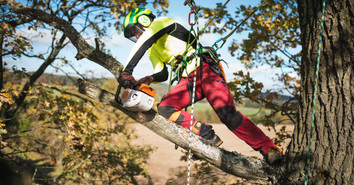
Arborists use a variety of tools to care for trees. Some of the most common items in their gear bag include chainsaws, saddles, carabiners, and, perhaps most important of all, ropes. Ropes allow professionals to ascend, descend, and maneuver through trees, among other uses. But they can't use any old rope for these tasks. They need specialized ropes that can withstand intense friction, heavy dynamic loads, and unpredictable weather. Let's look at some common types of ropes for tree care that arborists use on the daily.
Types of Rope: Rigging vs. Climbing
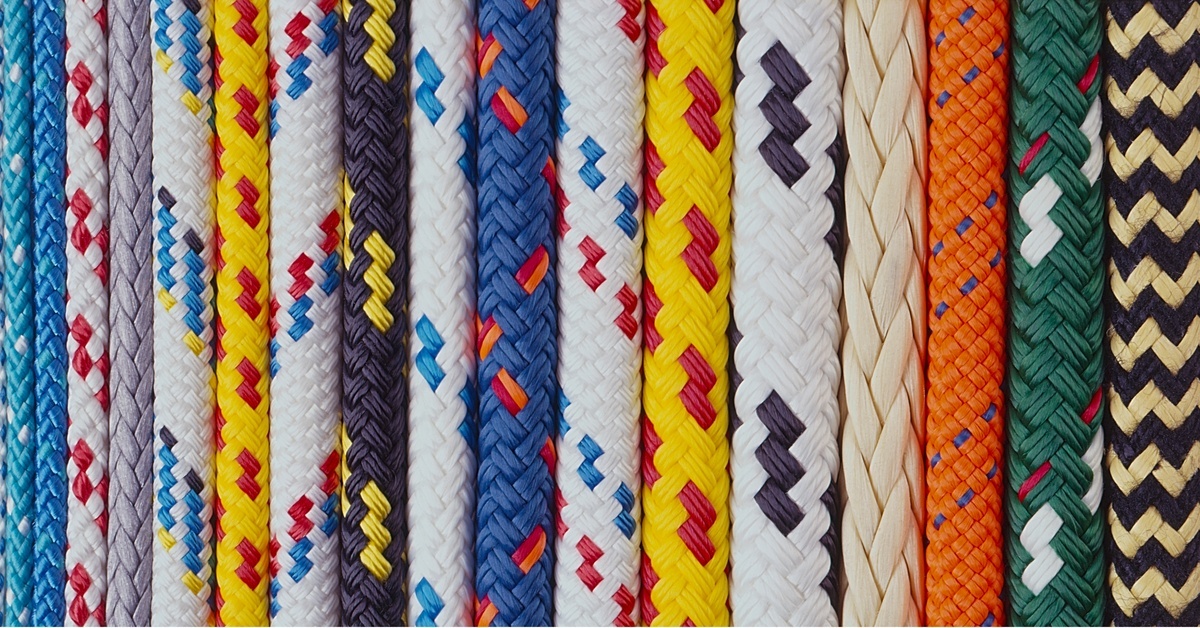
When you're looking at gear, you'll quickly notice that ropes generally fall into two main categories: rigging and climbing. While they might look similar to the untrained eye, mixing them up can be dangerous.
Rigging Ropes
You use rigging ropes when you need to lower heavy branches or logs to the ground in a controlled manner. Because they take a beating from heavy loads and friction against tree bark, they need to be incredibly strong and durable. But they don't necessarily need the same "bounce" or elongation properties as climbing ropes. In fact, you often want less stretch here so you have more control over the load.
Climbing Ropes
Climbing ropes support the arborist's weight as they ascend and move around the canopy. Climbing ropes are designed with stretch (elongation). If you slip or fall, that stretch absorbs the shock, so the force is dissipated rather than transferred directly to your body. This reduces the risk of injury. Climbing ropes are also easier to grip and knot compared to rigging ropes due to their softer, more flexible sheath and dynamic core construction.
Common Rope Materials
The fiber make-up of a rope determines how it behaves. Synthetics have largely replaced natural fibers in modern arboriculture because they last longer, hold more weight, and resist rot.
Polyester
Polyester is the most popular material for tree climbing ropes. It has a fantastic balance of properties: it's strong, has low stretch, and boasts excellent resistance to UV rays and abrasion. Perhaps most importantly, polyester maintains its strength even when wet. Since you can't always guarantee a sunny day for tree work, having gear that doesn't lose integrity in the rain is a huge plus.
Nylon
Nylon was once the king of ropes, and it’s still incredibly strong—often stronger than polyester. But it has a major characteristic that makes it tricky for general tree climbing: it stretches a lot. While high stretch is great for catching a falling rock climber (dynamic ropes), it’s frustrating for an arborist trying to ascend 50 feet. You’d waste a lot of energy just fighting the bounce.
But nylon is still valuable in rigging scenarios or lanyard components where shock absorption is beneficial. Just keep in mind that nylon loses a percentage of its strength when it absorbs water.
High-Modulus Polyethylene (HMPE)
If you see names like Dyneema or Spectra, you're looking at HMPE. This material is a marvel of modern engineering. It’s incredibly lightweight—it floats on water—yet, pound for pound, it’s stronger than steel.
Arborists typically use HMPE for heavy-duty rigging slings or winch lines where maximum strength and minimum weight are non-negotiable. It has almost zero stretch. The downside? It has a low melting point. You have to be very careful about heat buildup with these lines. It’s also quite slippery, so it doesn't hold standard knots very well and usually requires splicing.
Polypropylene
You'll mostly find polypropylene in throw lines—the thin, lightweight cords used to launch a weight into the tree to set the climbing line. It’s lightweight and cheap, but it has poor resistance to UV light and abrasion. It also has a low melting point. Because friction from sliding down a tree trunk can melt the fibers, it’s rarely used for life-support climbing lines in professional settings anymore.
Rope Strands and Construction
How the rope is woven is just as important as what it's made of. The construction dictates how the rope handles, how it knots, and how it runs through your gear.
16-Strand
For years, 16-strand rope was the industry standard. It features a load-bearing cover and a core that keeps the rope round. The cover is thick, durable, and easy to grip. If you use friction hitches (like a Blake's hitch), the textured surface of a 16-strand rope provides excellent bite. It’s a bit chunkier than other options, which some climbers love for the grip and others dislike for the bulk.
24-Strand
If you want something smoother and lighter, you might look at a 24-strand rope. These are typically "double braid" ropes, meaning they have a braided core inside a braided cover. The higher strand count on the cover makes the rope feel smoother in your hand and run faster through mechanical devices. It’s a popular choice for Single Rope Technique (SRT) or Moving Rope Technique (MRT) climbing.
32-Strand
Similar to the 24-strand, the 32-strand rope is a double braid construction but with an even finer weave on the cover. This makes it incredibly smooth. These ropes tend to be very static (low stretch) and are often the go-to choice for stationary rope systems. They work beautifully with modern mechanical ascenders and descenders because the tight sheath doesn't snag easily.
Other Considerations
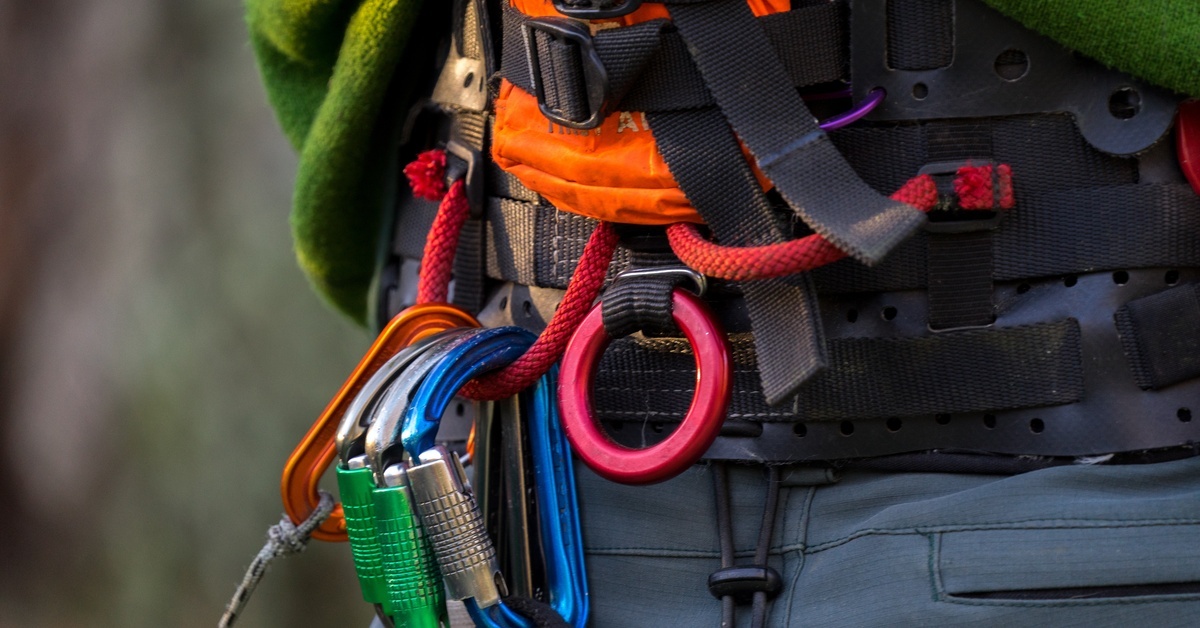
Choosing a rope isn't just about picking a material and a strand count. You have to think about how you actually work.
- Diameter: The thickness of the rope needs to match your gear. If your rope is too thin for your mechanical prusik, it might slip. If it's too thick, it might jam. Most climbing ropes range from 11mm to 13mm.
- Color and Visibility: High-visibility ropes (neon orange, green, or yellow) are easier to see in a dense canopy. This helps you avoid accidentally cutting your own line with a chainsaw—a mistake no one wants to make.
- Elongation (Static vs. Dynamic): "Static" ropes stretch very little (usually less than 5% elongation at working load). "Dynamic" ropes stretch a lot to absorb falls. Arborists usually want "semi-static" ropes—enough stretch to be comfortable, but not so much that you bounce like a yo-yo every time you move.
- Spliceability: Some ropes can be spliced (woven back into themselves to create a permanent eye loop), while others must be knotted. A spliced eye is generally stronger and more streamlined than a knot, but not every rope construction allows for it.
- Hand Feel: This is subjective, but important. Since you’ll be handling this rope all day, you want something that feels good in your grip. Some ropes are stiff; others are supple.
These are some of the common types of ropes arborists use for tree care. These ropes allow them to scale trees to trim heavy branches, manage canopy growth, and remove hazardous limbs. Without these ropes, arborists would have to use other methods to scale trees, like gaffs or spikes, which could potentially damage the tree's cambium layer and put the arborist in harm's way.
At Monarch Rope, we sell 16-strand, 24-strand, and 32-strand tree climbers rope made for arborists. Our ropes are durable and flexible, so you can safely maneuver without worrying about breakage or excessive wear.
The work arborists do is incredibly important; don't put yourself out of commission due to accidents from a frayed, subpar rope. Invest in high-quality gear from us and keep doing what you do best.