

Utility linemen face demanding working conditions that require specialized protective equipment. Whether maintaining overhead power lines or responding to electrical outages, these professionals encounter hazards that demand careful preparation. Working near energized conductors and operating at significant heights make personal protective equipment (PPE) a critical part of daily operations.
Understanding which equipment offers appropriate protection allows utility crews to make informed safety decisions. This complete guide to essential PPE for linemen covers the protective gear that supports electrical safety, fall prevention, and reliable performance in challenging environments.
Electrical-Resistant Gloves Protect Against Shock Hazards
Electrical exposure remains one of the most serious hazards linemen encounter. Rubber insulating gloves provide a protective barrier against electrical current when workers select the appropriate voltage class and follow established safety procedures.
The Occupational Safety and Health Administration (OSHA) establishes requirements for electrical protective equipment, including inspection and testing. Linemen must select gloves according to their maximum voltage exposure and applicable safety standards.
Rubber insulating gloves come in several classifications based on their voltage ratings. Leather protectors typically cover these gloves to guard against mechanical damage, although workers must follow applicable requirements regarding their use. Regular inspections and electrical testing remain necessary because even minor damage can compromise protection.
Protective Helmets Reduce Head Injury Risks
Overhead utility work exposes linemen to falling objects and accidental contact with surrounding structures. Protective helmets reduce the risk of head injuries while supporting electrical safety when workers choose appropriate models.
Not every hard hat offers the same protection. ANSI/ISEA Z89.1 identifies different helmet classifications, including Class E helmets, which undergo electrical insulation testing at 20,000 volts. This testing does not establish a safe working voltage or eliminate the need for electrical precautions.
Linemen should consider helmet compatibility with additional protective accessories. A properly fitted helmet must remain secure during climbing movements without interfering with other equipment. Workers should also inspect helmets for cracks, deterioration, and previous impact damage, following manufacturer replacement criteria.
Flame-Resistant Clothing Limits Burn Injuries
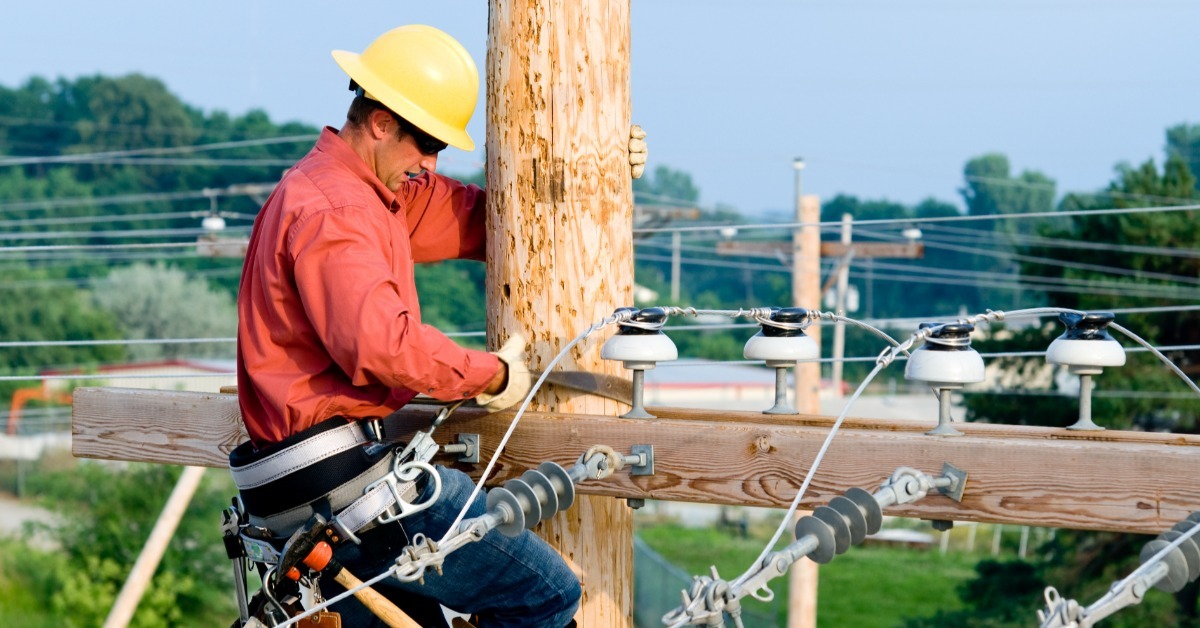
Electrical arcs release intense thermal energy within seconds, creating severe burn hazards. Flame-resistant (FR) clothing reduces the risk of clothing ignition and continued burning, while appropriate arc-rated garments provide protection against specified arc-flash thermal exposures.
Utility workers should understand the distinction between flame-resistant and arc-rated clothing. Although arc-rated garments have flame-resistant properties, not every flame-resistant garment carries an arc rating.
Employers must assess workplace hazards and determine appropriate protective clothing according to applicable standards. Garments should provide sufficient coverage without restricting movement, and their arc ratings must meet the requirements of the anticipated exposure. Proper laundering also matters because certain contaminants and cleaning products can affect protective performance.
Fall Protection Equipment Supports Safe Elevated Work
Climbing utility poles and working from elevated structures introduces significant fall hazards. Linemen rely on specialized fall protection systems to reduce exposure while maintaining the mobility their assignments require.
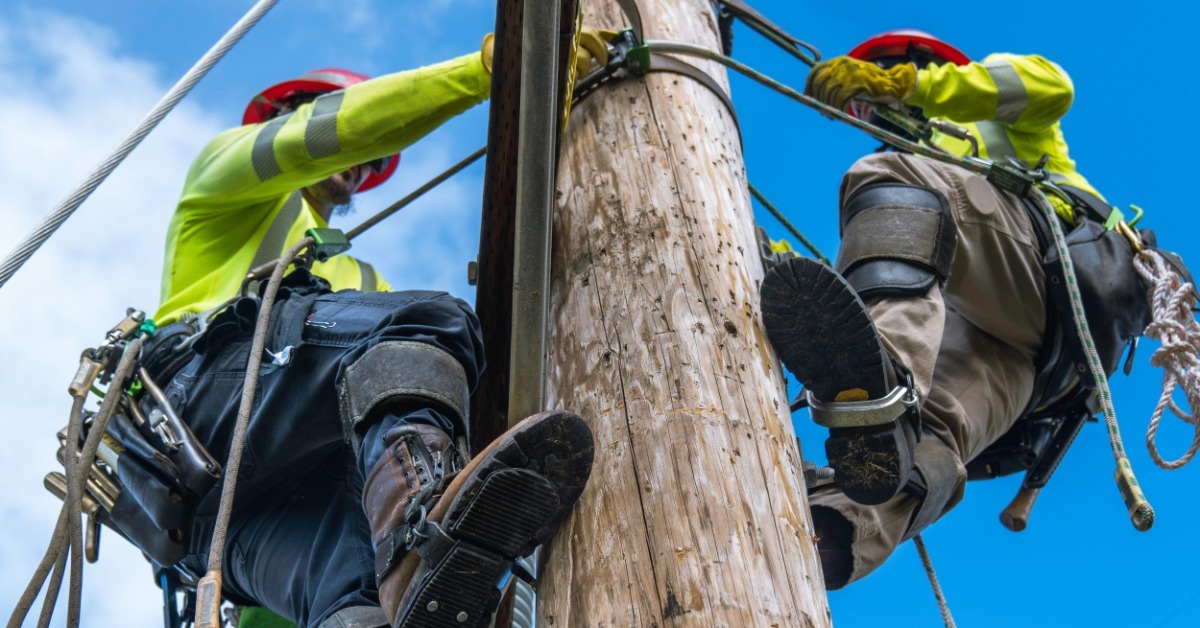
A complete system may include a full-body harness, positioning equipment, and an appropriate fall arrest system. Each component serves a distinct purpose, and workers must understand its limitations.
Work-positioning systems allow linemen to maintain a stable working position while performing tasks at height. However, positioning equipment does not automatically provide the same protection as a personal fall arrest system.
Crews must select compatible components and appropriate anchorage locations according to applicable regulations. Before climbing, workers should examine webbing, stitching, and connectors for deterioration. Equipment that experiences a fall arrest requires immediate removal from service until an authorized assessment permits further use under applicable requirements.
Safety Glasses and Face Shields Guard Against Eye Injuries
Flying debris, airborne particles, and electrical hazards threaten eye and facial safety during utility maintenance. Protective eyewear provides an essential barrier against common jobsite hazards. Safety glasses with appropriate impact protection can guard against particles that workers encounter while cutting materials or operating equipment. However, certain activities require additional protection.
For tasks involving electrical arc hazards, linemen may need arc-rated face shields or other specialized protective systems. Standard safety glasses alone cannot provide adequate protection against arc-flash thermal exposure.
Workers should select eyewear according to specific hazards rather than assuming one product suits every assignment. Anti-fog features and properly fitted frames also improve visibility during extended shifts.
Protective Footwear Improves Stability and Reduces Injury Risks
Footwear selection directly affects a lineman’s ability to navigate uneven terrain and maintain stable footing during demanding assignments. Utility workers often encounter slippery surfaces and obstacles surrounding electrical infrastructure. Protective boots should provide appropriate traction while supporting the physical demands of climbing.
Electrical hazard-rated footwear offers secondary protection under specified conditions, but these boots do not replace primary electrical protective equipment or safe work practices. Workers should evaluate footwear compatibility with climbing equipment when their assignments require pole climbing. Proper fit improves comfort throughout long shifts, while regular inspections allow workers to identify worn soles or structural damage before those conditions compromise performance.
Hearing Protection Reduces Exposure to Excessive Noise
Utility maintenance frequently involves equipment that produces potentially harmful noise levels. Extended exposure can contribute to permanent hearing damage, making hearing protection an important consideration.
Linemen may encounter loud generators or powered cutting tools during routine maintenance and emergency restoration. Employers should evaluate noise exposure and provide appropriate hearing protection according to applicable occupational requirements.
Earplugs and earmuffs offer different advantages depending on workplace conditions. Workers should select protection that provides sufficient noise reduction while maintaining compatibility with helmets and other necessary equipment. Proper fit matters because gaps or incorrect insertion can significantly reduce effectiveness.
Portable Lighting Improves Visibility During Night Operations
Emergency power restoration frequently requires crews to operate after sunset or in poorly illuminated areas. Limited visibility makes equipment inspection and precise movements more difficult. A reliable work headlamp provides hands-free illumination, allowing linemen to concentrate on their assignments without holding a separate flashlight.
When selecting lighting equipment, workers should consider brightness, battery runtime, and compatibility with protective helmets. Adjustable lighting settings allow crews to adapt illumination to changing conditions.
Lighting equipment must also meet applicable requirements for hazardous environments. Workers should verify product suitability before using electronic devices near potentially explosive atmospheres.
Proper PPE Maintenance Supports Long-Term Safety
Even high-quality protective equipment requires consistent attention. Environmental exposure, repeated use, and improper storage can gradually affect performance.
Crews should establish inspection routines that follow manufacturer recommendations and applicable safety standards. These procedures should identify equipment requiring cleaning, testing, or replacement.
Storage conditions also deserve consideration because excessive heat, moisture, and direct sunlight can damage certain protective materials. Employers should maintain appropriate inspection records while providing workers with clear procedures for reporting equipment concerns.
Equip Your Utility Crew
This complete guide to essential PPE for linemen emphasizes the importance of selecting equipment according to actual workplace hazards. Every protective component should meet applicable requirements and suit the demands of professional utility operations.
At Monarch Rope, we understand the importance of dependable equipment for professionals who work at height. We offer quality helmets, harnesses, and headlamps from trusted manufacturers to support demanding work environments. Explore our selection of professional safety equipment to find gear that meets your crew’s operational needs.