

Rope rescue operations demand precision, planning, and equipment that performs under pressure. Whether your team responds in oil fields, on wind turbines, inside industrial plants, or across remote terrain, every component in the kit plays a direct role in safety and efficiency.
Rescue teams need integrated systems that work together under load, adapt to changing environments, and meet evolving safety standards. Explore the essential pieces of rope rescue operation gear that form the backbone of a dependable rescue setup.
Static and Technical Ropes
Professional operations demand ropes rated and certified for technical rescue use. Static and low-stretch ropes provide the stability required for hauling, lowering, and controlling descent. Unlike dynamic lines designed for fall absorption, technical rescue ropes limit elongation under load and maintain system predictability.
Diameter selection matters; many rescue teams rely on 11 mm or 12.5 mm ropes because they balance strength, grip compatibility, and durability. Sheath construction affects abrasion resistance, especially when edges, steel structures, or rough bark enter the equation. You should also evaluate tensile strength ratings, compatibility with hardware and devices, resistance to chemicals and contaminants, and color coding for system identification.
Full-Body Harnesses and Work Positioning Systems
A rope rescue system functions only as well as the harness that anchors it to the wearer. Full-body harnesses distribute load across the shoulders, waist, and legs, reducing pressure points during suspension. In rescue scenarios, that load may last longer than anticipated.
Comfort influences performance. Rescuers who remain stable and supported can focus on rigging, patient packaging, and hazard management. Integrated sternal and dorsal attachment points allow for vertical and horizontal orientation depending on system design.
Work positioning systems, including adjustable lanyards and side D-rings, add control when rescuers transition between tasks. Teams operating in industrial or arboricultural environments often require harnesses that allow both rescue and positioning functions without swapping equipment mid-operation.
Carabiners, Connectors, and Rigging Plates
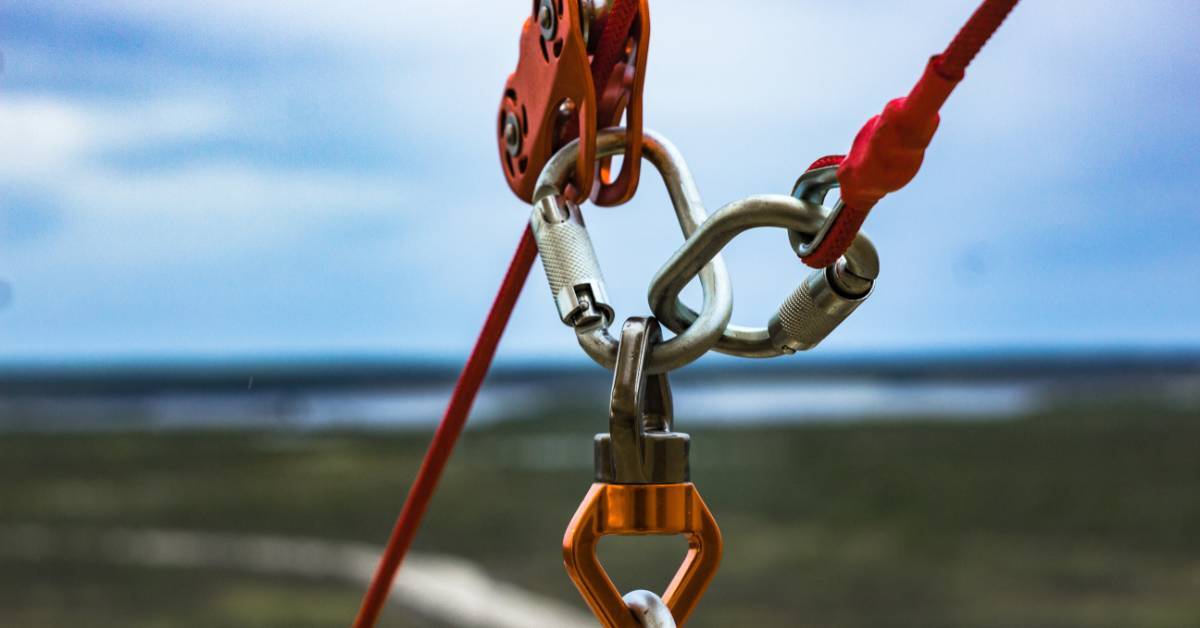
Hardware connects every part of your rope rescue system. Carabiners, shackles, swivels, and rigging plates transfer load between components and prevent unwanted movement. Strength ratings and gate design should guide your selection.
Steel carabiners often serve high-load anchor or mainline applications because they offer exceptional durability. Aluminum connectors reduce weight for rescuers who carry gear at height, and triple-action auto-locking gates enhance safety when teams work in complex environments. Rigging plates improve organization and reduce cross-loading risk by distributing multiple lines at a single anchor point. When systems involve mainlines, belay lines, tag lines, and haul lines, proper load distribution prevents hardware failure and confusion.
Pulleys and Mechanical Advantage Systems
Hauling a patient or rescuer demands mechanical efficiency. Pulleys reduce friction, increase mechanical advantage, and conserve energy during vertical or high-angle rescue. Without them, teams waste strength and time.
High-efficiency pulleys with sealed bearings maximize performance under load, while large-diameter sheaves reduce rope wear and maintain smoother operation. Side plates designed for rescue use accommodate thicker technical ropes and simplify mid-line attachment.
In more complex scenarios, a progress capture pulley system becomes critical. This configuration allows teams to haul a load upward without losing gained distance if tension slips. It prevents backward movement during resets and enhances overall control during vertical raises.
Anchors and Edge Protection
Anchors secure the entire load path, from the rescuer to the patient to the haul team. Natural anchors, structural steel, vehicles, or artificial anchor systems may all serve this purpose depending on location.
Anchor straps, webbing, and adjustable anchor devices provide versatility. Teams working in industrial or wind energy environments often rely on fixed structural points, while field operations may require portable anchor systems.
Edge protection often receives less attention than it deserves, but sharp edges can compromise rope integrity within seconds under load. Edge rollers, pads, and sleeves prevent abrasion and extend rope lifespan during high-angle or confined-space rescue.
Descenders and Belay Devices
Controlled descent and belay management define the safety margin in rope rescue. Descenders regulate speed and friction during lowering operations, while belay devices provide redundant fall protection in case the mainline fails.
Industrial rescue often calls for devices that offer hands-free locking, panic braking features, and compatibility with larger-diameter ropes. Smooth modulation matters when lowering a patient over distance or through obstacles.
Some systems incorporate tandem belay configurations to enhance redundancy. Others rely on specialized descent control devices rated for two-person loads. Whatever configuration your team chooses, device selection must align with expected weight, rope size, and operational complexity.
Ascenders and Rope Grabs
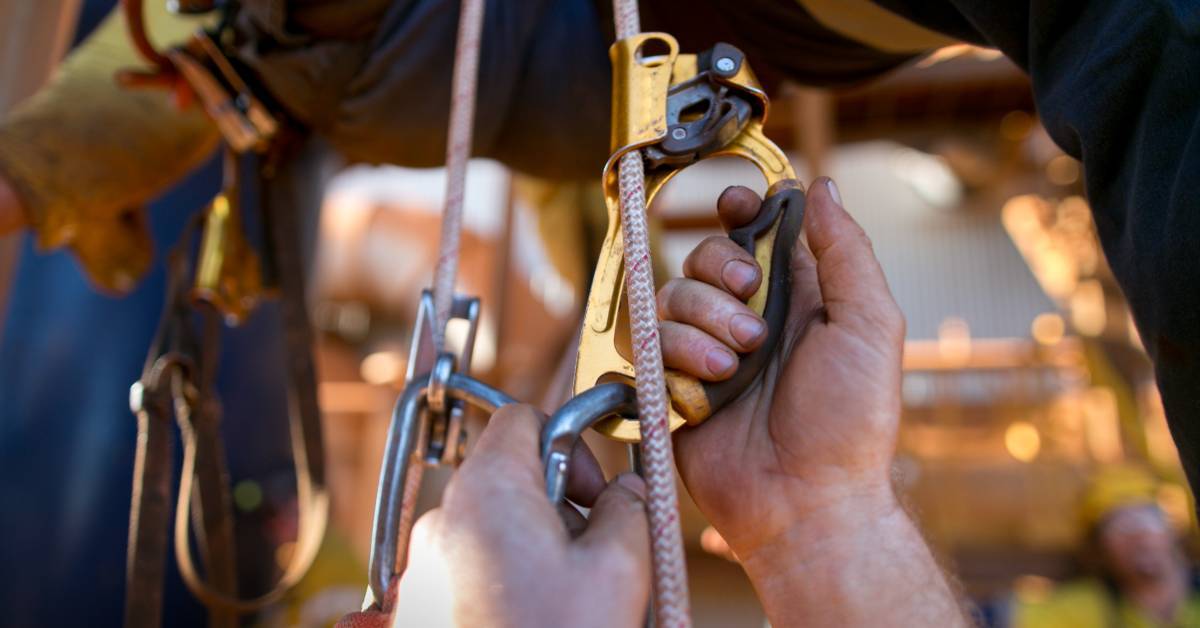
Vertical rescue often requires rescuers to climb fixed lines, reposition, or assist a patient during ascent. Ascenders and rope grabs provide upward mobility while maintaining fall protection.
Handled ascenders support ergonomic climbing, and chest ascenders integrate into full-body harness systems for hands-free progress. Rope grabs function as adjustable backup devices when configured correctly.
Compatibility with rope diameter remains critical, as mismatched devices can slip or damage the rope sheath. Teams must verify ascender and rope grab manufacturer specifications before deployment. Reliable mobility tools improve both speed and safety.
Personal Protective Equipment and Lighting
Rescue operations expose teams to falling objects, sharp edges, extreme weather, and limited visibility. Personal protective equipment (PPE) safeguards rescuers so they can focus on patient care and rigging precision.
Helmets designed for technical rescue provide chin straps, impact resistance, and accessory mounting points. Gloves protect against rope burn while maintaining dexterity, and eye protection shields against debris during cutting or rigging adjustments. Every essential piece of PPE gear should integrate seamlessly with harnesses and communication systems, as professional rope rescue operations leave no room for equipment incompatibility.
Lighting also plays a decisive role. Low-light industrial environments and nighttime responses demand high-output headlamps with reliable battery life. Hands-free illumination ensures rescuers can manage knots, connectors, and patient packaging without compromise.
The Right Gear for the Job
Rope rescue requires a cohesive system built from high-quality equipment designed for professional environments. Oil and gas facilities, wind farms, arboricultural worksites, and industrial plants each introduce unique challenges. The right gear allows teams to adapt quickly while maintaining compliance with safety standards.
Investing in professional-grade ropes, connectors, pulleys, harnesses, and protective equipment directly supports operational readiness. Teams that equip themselves with reliable, up-to-date gear position themselves to respond with confidence when every second matters.